

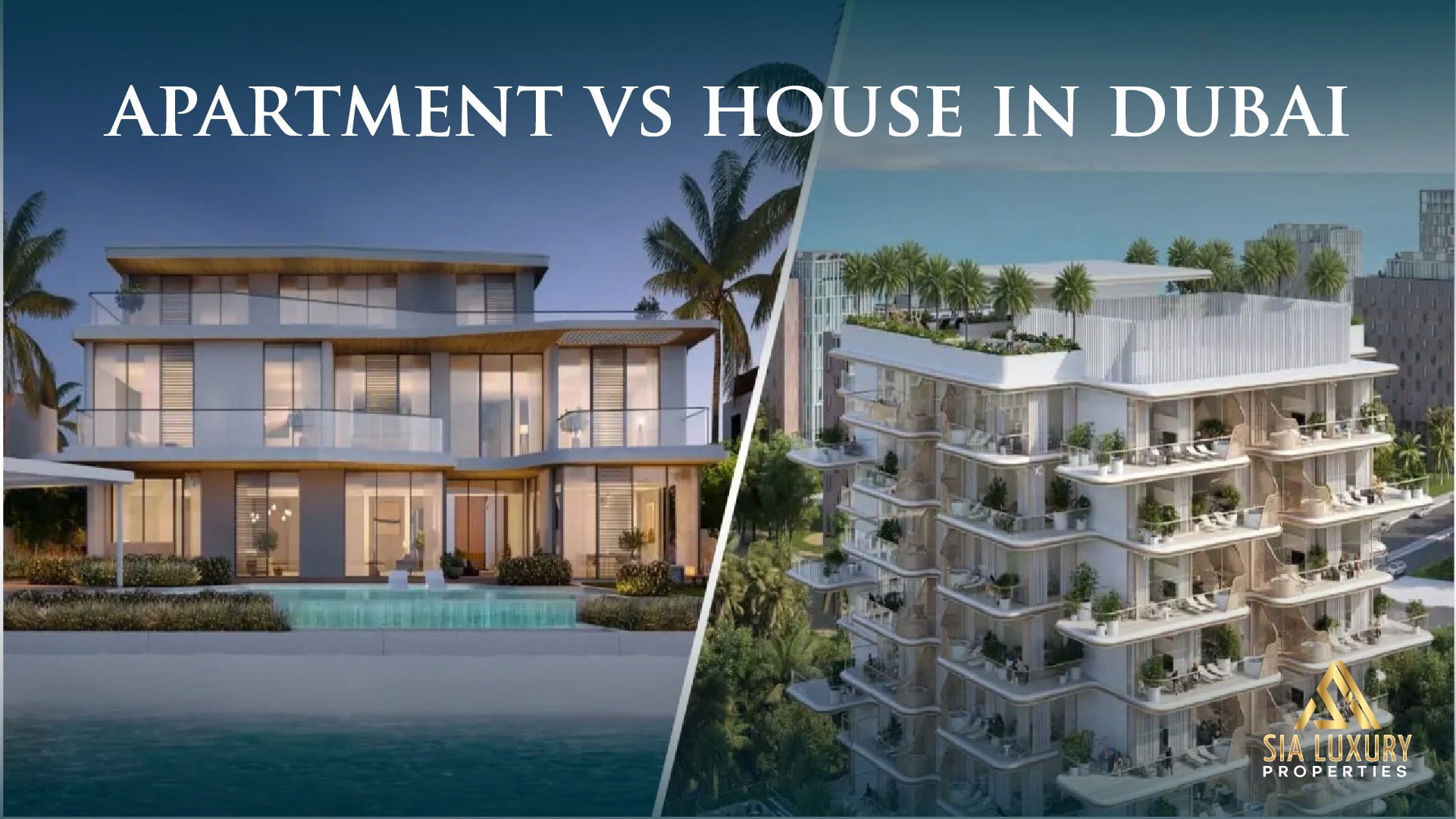
Apartment vs House in Dubai: Which One is Cheaper in 2026?
Whether you are a young professional moving for a tax-free salary or a family looking for a sun-drenched sanctuary, the first question everyone asks about Dubai real estate is: “Should I buy an apartment or a house?” In a city where you can live in a sky-high studio overlooking the Burj Khalifa or a sprawling desert villa with its own garden, the answer isn’t always as simple as looking at a price tag.
Generally, apartments in Dubai are cheaper than houses (villas or townhouses) in terms of both the initial purchase price and ongoing monthly bills. In early 2026, a standard two-bedroom apartment in a popular area might cost between AED 1.5 million and AED 2.5 million, whereas a similar three-bedroom villa starts at roughly AED 3 million and can easily exceed AED 10 million in luxury communities. However, “cheapness” is a moving target; while apartments have lower sticker prices, houses often offer better long-term value for growing families and currently show higher capital appreciation rates in the 2026 market.
This article will break down the true costs, lifestyle differences, and investment potential of apartments versus houses in Dubai, helping you navigate everything from hidden maintenance fees to the specific amenities that define living in this global hub.
1. Pros and Cons: Living in an Apartment vs. a House
Choosing between an apartment and a house in Dubai is primarily a choice between convenience and privacy.
The Apartment Lifestyle: Convenience Above All
Apartments are the heartbeat of Dubai’s urban centers like Dubai Marina, Downtown, and Business Bay.
-
Pros: You are usually closer to work, the Metro, and world-class dining. Most buildings offer a “lock-and-leave” lifestyle with 24/7 security, meaning you can travel without worrying about your home.
-
Cons: You live in close proximity to neighbors, which means shared walls and common elevators. Outdoor space is typically limited to a balcony.
The House Lifestyle: Space and Privacy
Villas and townhouses are found in gated communities like Dubai Hills, Arabian Ranches, and Damac Hills.
-
Pros: You get a private garden, a garage, and significantly more square footage. It is the gold standard for families with children or pets.
-
Cons: These communities are often further from the city center, making a car essential. You are also solely responsible for your own roof, garden, and private pool.
2. Cost Comparison: Are Apartments Really Cheaper?
When we talk about cost in Dubai, we must look at the Purchase Price vs. Running Costs.
The Sticker Price
In 2026, the entry-level price for a studio apartment in a budget area like International City is around AED 500,000. In contrast, the cheapest townhouses in emerging areas like Dubai South or Emaar South start closer to AED 1.8 million.
Hidden Costs and Service Charges
This is where many beginners get surprised. In Dubai, every owner pays a “Service Charge” per square foot to maintain the community.
-
Apartments: Charges are higher per square foot (often AED 15 to AED 30) because you are paying for elevators, communal gyms, and high-rise maintenance.
-
Houses: Charges are lower per square foot (often AED 3 to AED 7), but because the house is much larger, the total bill might be similar to or higher than an apartment’s.
3. Amenities and Facilities
Dubai is famous for its “resort-style” living. Both property types offer great perks, but the way you access them differs.
-
In Apartments: Facilities are “shared.” You walk down the hall to a high-end gym or a rooftop pool. The cost of these is included in your service fee, and you don’t have to worry about cleaning the pool or fixing the treadmill.
-
In Houses: You often have your “own” amenities. A private pool or a backyard BBQ area is your responsibility to maintain. However, gated villa communities also provide master-community parks, tennis courts, and dog parks that all residents can use.
4. Space, Layout, and Storage
Size is the most obvious differentiator.
-
Apartments: Layouts are designed for efficiency. Storage can be a challenge, and you may need to rent external storage units if you have bulky sports equipment or many boxes.
-
Houses: Villas offer specialized rooms like a “Maid’s Room,” a laundry room, and built-in garages. If you have a large family or work from home and need a dedicated office, a house provides the “elbow room” that an apartment cannot.
5. Maintenance and Upkeep: Who Fixes the AC?
In the heat of a Dubai summer, a broken Air Conditioning (AC) unit is an emergency.
-
Apartments: Major repairs to the building’s exterior or common pipes are handled by the building management. You only fix what is inside your four walls.
-
Houses: You are the “Master of the Manor.” If the roof leaks or the garden irrigation breaks, it’s your job to call a contractor and pay the bill. Many homeowners sign up for Annual Maintenance Contracts (AMC), which cost between AED 2,000 and AED 6,000 per year to cover routine fixes.
6. Neighborhoods and Security
Vertical Communities
Apartment neighborhoods like JLT (Jumeirah Lake Towers) are “walkable.” You can walk to the pharmacy, the grocery store, and the park within five minutes. Security is usually a desk in the lobby with a guard who knows your face.
Horizontal Communities
Villa neighborhoods are “gated.” You drive through a security checkpoint to enter. There is a strong sense of community, with “moms’ groups” and neighborhood events, but you will likely need to drive 10 minutes just to get out of the community and onto the main highway.
7. Flexibility and Long-Term Commitment
-
Renting vs. Buying: Renting an apartment is great for newcomers who want to test out different areas of the city. A one-year lease is standard.
-
Stability: Buying a house is usually a 5-to-10-year commitment. Because the costs of buying (fees) and selling are high, you want to ensure you are staying long enough for the property value to grow.
8. Lifestyle and Convenience
-
The Commute: If you work in DIFC or Downtown, living in an apartment nearby saves you hours of traffic.
-
Public Transport: Most apartments are built near Metro stations. Very few villa communities have direct Metro access, making a car (and a UAE driving license) a non-negotiable for house dwellers.
9. Investment Potential: ROI and Capital Growth
In 2026, we are seeing an interesting trend:
-
Apartments for Income: They offer higher Rental Yields. You can often earn 7% to 8% of the property’s value back in rent every year.
-
Houses for Growth: Villas have shown higher Capital Appreciation. Because there is limited land in prime areas, the value of a house tends to go up faster over time compared to apartments, where new towers are constantly being built.
10. Personal Preferences: Making the Final Decision
At the end of the day, your choice depends on your “Life Stage.”
-
Singles and Couples: Usually prefer the high-energy, “easy” life of a Dubai Marina or Business Bay apartment.
-
Families: Almost always migrate toward the space and safety of a villa in areas like Arabian Ranches or Dubai Hills.
-
Investors: Often buy multiple smaller apartments to spread their risk and maximize their monthly rental checks.
Conclusion
So, are apartments cheaper than houses? In most cases, yes. They require less money upfront and have lower monthly running costs. However, a house provides a “land asset” and a level of privacy that many find worth the extra cost. In the Dubai of 2026, both options are thriving, and the right choice simply depends on whether you want to look at the city from a balcony or walk out of your front door into a garden.
Recent Posts

Best Area to Live in Dubai for Singles: The 2026 Ultimate Guide

Best Area to Live in Dubai with Family In 2026