
All About Freehold vs Leasehold Property in Dubai
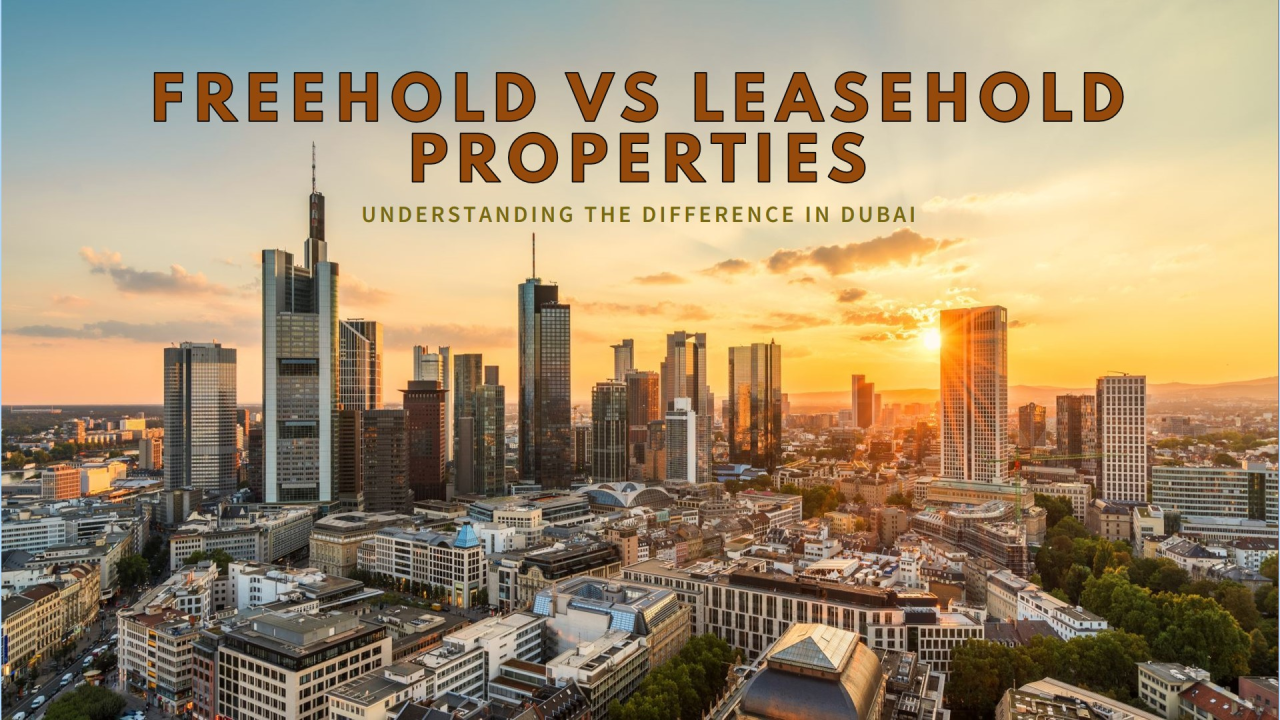
Imagine buying a beautiful apartment in Dubai, renovating the kitchen exactly how you like it, and passing it down to your grandchildren fifty years from now. Now, imagine buying a similar apartment where you might need permission just to paint the walls, and after 99 years, the property goes back to the landlord. This is All About Freehold vs Leasehold Property in Dubai. If you are looking to invest your hard-earned money in Dubai, understanding this distinction is the single most important step you will take.
Freehold property means you own the house and the land it sits on forever. You have full control to renovate, sell, or rent it out without needing permission from a landlord. Leasehold property, on the other hand, means you are buying the right to use the property for a long time (usually 99 years), but you do not own the land. Once the 99 years are up, the property goes back to the original owner unless the lease is renewed.
This article will guide you through everything you need to know about Freehold vs. Leasehold property in Dubai. From understanding your ownership rights and potential returns to navigating the buying process and even converting leasehold properties to freehold in certain areas, we will cover it all.
Understanding the Concept of Freehold vs Leasehold Property in Dubai
When you decide to buy property in Dubai, the first question you must ask is: “Who owns the land?”
In a Freehold purchase, you become the absolute owner. Your name is registered on the Title Deed at the Dubai Land Department (DLD) as the owner of the unit and a share of the land. This ownership does not expire. It is yours forever and can be inherited by your family. This is the most popular option for international investors because it offers complete control.
In a Leasehold purchase, you are technically buying a very long-term lease (often 99 years). You own the structure (the bricks and mortar) for that period, but the land still belongs to the “freeholder” (usually the government or a master developer). You have the right to live in it or rent it out, but you might face restrictions if you want to make major changes to the property.
Top Developments:
- Freehold Areas: Dubai Marina, Downtown Dubai, Palm Jumeirah, Jumeirah Village Circle (JVC).
- Leasehold Areas: Dubai Silicon Oasis (certain parts), Green Community, Deira, and Al Qusais.
Advantages of Owning a Freehold Property in Dubai
For most investors, especially those new to Dubai, freehold is the golden standard. Here is why:
- Full Control: You are the boss. Want to knock down a wall to make an open-plan kitchen? You can do it (with standard approvals). You don’t need to ask a landlord for permission to sell or rent your property.
- Higher Return on Investment (ROI): Freehold properties generally appreciate (increase in value) better over time because the land value goes up.
- Forever Ownership: There is no “expiration date.” You can leave the property to your children or heirs in your will, securing your family’s future wealth.
- Residency Visas: Owning a freehold property worth AED 750,000 or more makes you eligible for a 2-year renewable residency visa. If the property is worth AED 2 million, you can apply for the prestigious 10-year Golden Visa.
Benefits of Investing in a Leasehold Property in Dubai
You might wonder, why would anyone choose leasehold if freehold gives you ownership forever? The answer usually comes down to price and location.
- Lower Cost: Leasehold properties are significantly cheaper than freehold properties. You can often buy a larger apartment in a leasehold area for the same price as a small studio in a freehold area.
- High Rental Yields: Because the purchase price is low, but rental prices in Dubai are high across the board, leasehold properties can offer excellent annual returns (sometimes 8-10%).
- Unique Locations: Some of Dubai’s older, more established, and greener communities (like Green Community in DIP) are leasehold. If you prioritize living space and huge gardens over land ownership, this might be for you.
- Conversion Potential: In rare cases, leasehold properties can be converted to freehold. For example, recent updates in 2025 allow certain leasehold plots in Sheikh Zayed Road and Al Jaddaf to be converted to freehold, instantly increasing their value.
Tips for Buying a Freehold Property in Dubai
Buying a freehold property is exciting, but you need to be smart about it.
- Know the Law: Ensure the project is in a designated “Freehold Area.” While most new developments are, it is always safer to double-check with the Dubai Land Department.
- Research the Developer: Not all developers are equal. Stick to reputable names like Emaar, Nakheel, Damac, or Sobha. They have a track record of delivering quality projects on time.
- Future Development: Look at the master plan. Is there a metro station coming up nearby? A new mall? These factors will skyrocket your property’s value in 5-10 years.
- Payment Plans: many developers offer attractive payment plans (e.g., pay 1% per month). Make sure you understand the schedule and any penalties for late payments.
Important Factors to Consider When Purchasing a Leasehold Property in Dubai
Buying leasehold requires a bit more homework because the clock is always ticking.
- Lease Terms: Always check how many years are left on the lease. A property with 90 years left is worth much more than one with 30 years left.
- Renewal Process: Ask what happens when the lease expires. Can you renew it? How much will it cost?
- Restrictions: Read the contract carefully. Are you allowed to sublet the property? Can you make renovations? Some leasehold contracts are strict about changes.
- Resale Value: Remember that as the lease gets shorter, the property value might decrease. Leasehold is often better for cash flow (rental income) rather than capital appreciation (selling for a profit later).
Steps to Follow When Investing in a Freehold or Leasehold Property in Dubai
Whether you choose freehold or leasehold, the buying process in Dubai is straightforward and transparent.
- Determine Your Budget: Don’t forget to include extra costs like the 4% DLD (Dubai Land Department) transfer fee and the 2% agency commission.
- Choose a Licensed Agent: Ensure your real estate agent is RERA-certified (Real Estate Regulatory Agency). They will guide you to the right property type for your goals.
- The MOU (Contract F): Once you find a property, you and the seller sign a Memorandum of Understanding (MOU), which locks in the price.
- No Objection Certificate (NOC): The developer must issue an NOC stating there are no outstanding service charges on the property.
- Transfer Day: You, the seller, and the agent go to a DLD Trustee Office. You hand over the manager’s cheque, and they issue the Title Deed (for freehold) or Lease Registry (for leasehold) in your name.
Common Misconceptions and Myths
Let’s bust some common myths that scare new investors away.
- Myth: “Only Emiratis can own freehold property.”
- Fact: False! Foreigners can own 100% freehold property in designated investment zones (like Marina, Downtown, etc.).
- Myth: “Leasehold properties are a waste of money.”
- Fact: Not necessarily. If you buy a leasehold property cheaply and rent it out for 15 years, you might make your money back twice over, even if you don’t own the land forever.
- Myth: “You can never sell a leasehold property.”
- Fact: You can sell your “lease rights” to someone else. The buyer simply takes over the remaining years of the lease.
Legal Framework for Freehold and Leasehold Properties in Dubai
Dubai has a world-class legal system to protect investors. The Dubai Land Department (DLD) is the main government body that regulates all property transactions.
- Freehold Law: Law No. 7 of 2006 regarding Real Property Registration in the Emirate of Dubai officially allowed foreigners to own freehold property in designated areas.
- Leasehold Rights: Your lease is registered with the DLD, meaning the landlord cannot just kick you out or cancel your lease without a valid legal reason.
- Dispute Resolution: If you have a problem with your developer or landlord, you can file a case with the Rental Dispute Center (RDC) or the courts, which are known for being fair and efficient.
Recent Update (2025): The government has allowed owners of specific leasehold plots in Sheikh Zayed Road to convert their titles to freehold. This is a massive legal shift, turning “renters” into “owners” and boosting investor confidence.
Comparison of Freehold and Leasehold Properties in Popular Areas of Dubai
Location is everything. Let’s compare popular areas to see what you get.
| Feature | Freehold (e.g., Dubai Marina) | Leasehold (e.g., Green Community) |
| Ownership | You own the land & unit forever. | You own the unit for 99 years. |
| Price | High (Expensive per sq. ft.). | Lower (More value for money). |
| Community Feel | Modern, high-rise, busy. | Green, spacious, family-oriented. |
| Rental Demand | Very High (Tourists & Expats). | High (Families & Long-term residents). |
| Best For | Capital Growth (Selling later). | Rental Income (Monthly cash flow). |
Understanding the Process of Selling a Freehold or Leasehold Property in Dubai
When it is time to exit your investment, the process differs slightly.
Selling Freehold:
This is the easiest to sell. You list it, find a buyer, and transfer the Title Deed. Because you own the land, banks are more willing to give mortgages to your buyers, making it easier to sell quickly.
Selling Leasehold:
This can be trickier.
- Mortgage Difficulty: Banks are often reluctant to give mortgages for leasehold properties, especially if the remaining lease term is short (e.g., less than 30 years). You might need to find a “cash buyer.”
- Transfer Fees: You will still need to pay transfer fees to the developer or freeholder to assign the lease to the new owner.
- Price Negotiation: Buyers will use the “declining lease term” as a bargaining chip to lower the price.
Conclusion
Dubai offers a real estate market unlike any other in the world. Whether you choose Freehold for its safety, eternal ownership, and capital growth, or Leasehold for its affordability and high rental yields, the key is to align your choice with your financial goals.
If you want a legacy to leave for your family, Freehold is the clear winner. If you want a high-income generator for a lower entry price, Leasehold is a strategy worth considering. Whatever you choose, Dubai’s regulated market and tax-free environment make it one of the best places globally to invest in real estate.
Recent Posts
Best Area to Live in Dubai for Singles: The 2026 Ultimate Guide
Best Area to Live in Dubai with Family In 2026